HomeToursMorocco 6-Day Tour Atlas Mountains Trek

Morocco 6-Day Tour Atlas Mountains Trek

Overview

The 6-day Atlas Mountains trek offers an exciting journey through Morocco’s stunning High Atlas region. Highlights include trekking to the Toubkal summit (4,167 meters), visiting Berber villages, and exploring dramatic valleys like the Mizane Valley. You’ll enjoy camel rides, scenic hikes, and nights in traditional desert camps. This adventure is ideal for those seeking a mix of cultural immersion and breathtaking mountain views.

Explore Morocco’s Sahara Desert on a 5-day tour from Casablanca to Merzouga. Optimize your adventure with our expert guides.


What’s Included

  • Pickup at your riad or hotel in Marrakech.
  • Transport in a car with air conditioning
  • English-speaking chauffeur / tour guide.
  • All meals according to the itinerary.
  • Camel ride in Sahara desert
  • Sleeping in desert camp.
  • Transfer to your Marrakech hotel.

 Not Included

Lunches / Drinks / Admission Fees

Entry fees for museums, monuments


PRIVATE TOUR HIGHLIGHTS:

  • Exploring High Atlas Mountains
  • Stopping at mountain Berber villages
  • View of Tizi n’Tichka pass
  • Visit Unesco kasbah of Ait Benhaddou
  • Visit Ouarzazate movie studios
  • Visit Dades Gorges, Todra Gorges
  • Camel trek in Erg Chebbi desert
  • Sleeping in desert camp


DEPARTURE / ARRIVAL:

Hotel pick up at 8.30 a.m. On the final day, we return at 7 p.m. and leave you off at your hotel or desired location.

GET A PRICE QUOTE:

To reserve private tour from Marrakech , we require some of your details. Please fill up the contact form. We are fully flexible to organize your private tour depends on your travel ideas and budget.

What To Expect

The best morocco trekking trip from Marrakech,we can recommend to our guests is a combination between two different parts of Morocco: the Atlas Mountains and Sahara desert. So first part which is a trekking in the Atlas Mountains*trek adventure* and, the second part which is a Camel ride in Erg Chebbi desert Merzouga* camel trek* for fun. First adventure part is include the Toubkal mount peak and the second part is an experience of Camel caravan trek for a night at the Berber nomad camp. the basic of Marrakech morocco trek program is trekking in atlas and Sahara morocco tours and this trek tour plan is available to explore both areas and life style of nomads in the mountain ; Sahara from Marrakech…we manage also on parallel other Trips in Morocco, like : (1,2,3,4,5,6,7,8,9,10,11,12,13,14,15 day trek trip tour from Marrakech to Desert ; Toubkal Atlas Mountains)

1

DAY 1 : MARRAKECH – IMLIL – REFUGE CAMP OF TOUBKAL

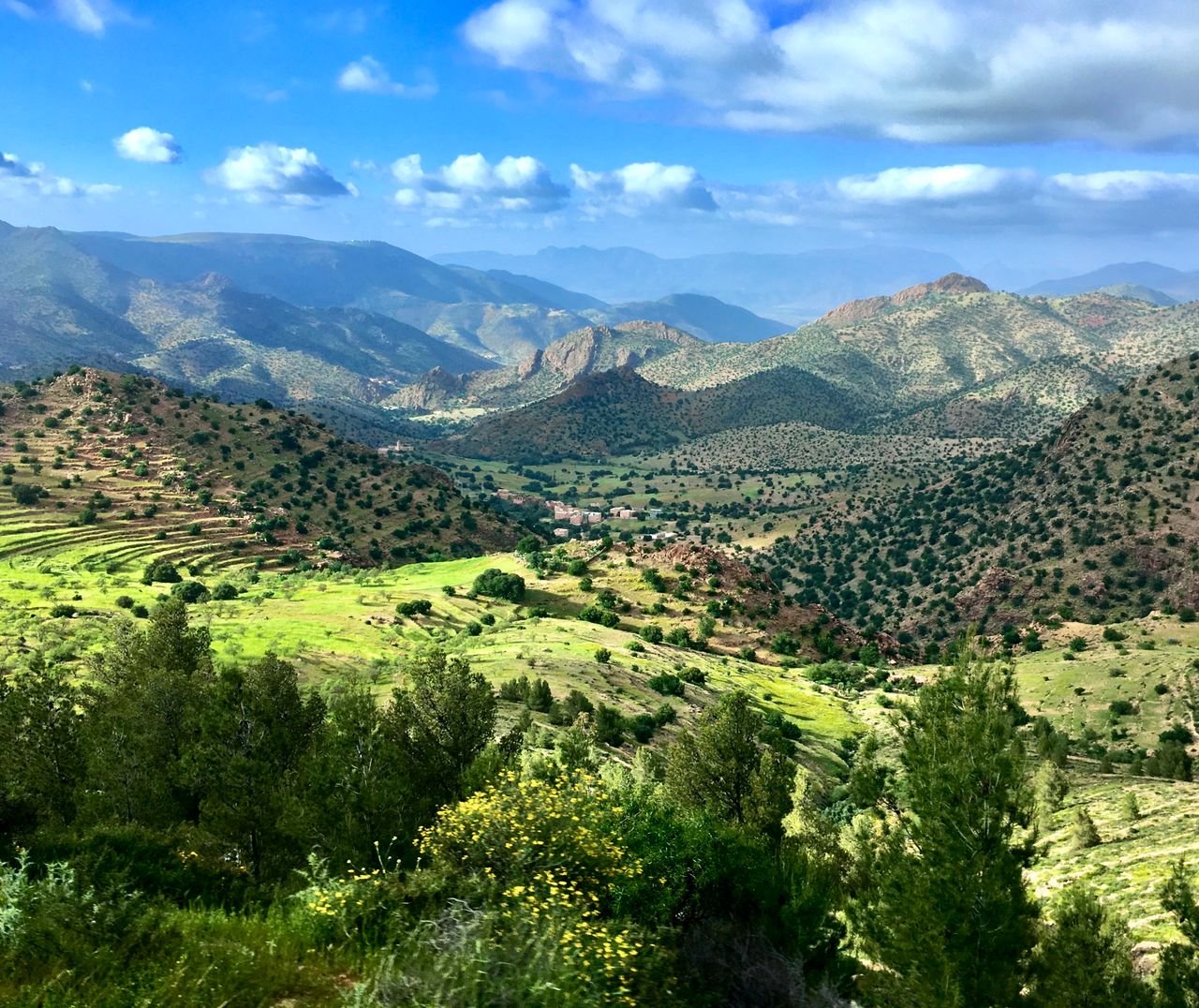
Drive from Marrakech city to Imlil village and atlas trek to Toubkal Refuge via Aremd ; the Mizane Valley,Leaving the city behind,then we drive towards the toubkal peak and plunging valleys of the Toubkal mountainMassif as well. Crossing the Haouz Hill, we pass through the tiny town of Asni, from where our road begins to climb atlas towards the plains of the Massif. Below us the valley of the river Rhirhaia stretches out into the distance and small villages cling to the sides of the steep plains ,as we meander our way towards the village of Imlil. Here we leave our vehicle , and our mountain guide, begin our trek, heading along the Mizane Valley, first towards the village of Aremd and then onto the shrine of Sidi Chamharouch. Built on a moraine spur overlooking the valley floor,Aremd is the largest village in the valley and provides an interesting mix of traditional terraced farming, gites and streets that seem to be permanently gridlocked by goats and cattle. For generations the local Berber villagers have worked these lands, producing corn, potatoes and walnuts from the harsh landscape. Continuing east and crossing the flood plain our route takes us along mule tracks and up into the high rocky cliffs above the valley. Crossing the river, we eventually come to the pastoral shrine of Sidi Chamarouch, which attracts tourists and pilgrims alike (although only Muslims are allowed to cross the stone bridge to visit the marabout shrine itself). The village sits besides a small waterfall, a jumbled cluster of houses that seem to melt together into an anarchic mass. From here the trail continues to climb steadily, snaking and zigzagging its way up to the snowline and the Toukbal Refuge (3206m), our stop for the night. Approx 5hrs walking.

2

DAY 2 : REFUGE CAMP – TOUBKAL SUMMIT – IMLIL VILLAGE

Trek to summit of Jebel Toubkal (4167m) and return to Imlil Early this morning we make our attempt on the summit of Jebel Toukbal, the second highest peak in Northern Africa, crossing the stream above the refuge and then heading across one of the mountains numerous scree fields, where we will have to negotiable a seemingly endless carpet of boulders and rocks. The walking is relatively straightforward, but the scree and the altitude will make the going quite difficult in parts, however, the views along the way make the journey more than worthwhile. Cresting the ridgeline we find ourselves on the plateau, from where it is a short walk to the summit and the vistas out across the surrounding landscape are quite breathtaking. From here there are unrestricted views in every direction, from the Marrakech Plain to the High Atlas in the north and as far south as the Anti-Atlas and the Sahara. Pliny, the great Roman scholar, once described the High Atlas Mountains as "the most fabulous mountains in all of Africa" and from our vantage point high above the valley it is easy to understand why. Retracing our steps we then return down the mountain and head back towards Imlil .

3

DAY 3 :  IMLIL – ROSES VALLEY 

You will be picked up from your accommodation in Imlil at 8.00am and head out over the Atlas Mountains, driving over the stunning Tizi-n- Tichka mountain pass. You’ll pass through lots of Berber villages, and once you’re in the desert, you’ll see riverside oases and barren hillsides dotted with kasbahs (fortified dwellings that house families and their livestock). Along the way, you will have the option either to take a break and visit the Ouarzazate Film Studios or stop for a hike. Once you reach near Dades Gorges, you have the option of going for a hike, or relaxing at your hotel. Overnight in Roses valley.

4

DAY 4 : ROSES VALLEY – TODRA GORGES – MERZOUGA 

Breakfast at the hotel. Transfer from the Roses Valley to Todra Gorges – a massive fault dividing the High Atlas Mountains, rising up 300m in a narrow valley with palmeries and Berber villages. Here, you can go for a hike to explore the palmery, a green oasis full of large date palms. After lunch you’ll head further into the desert to the gateway town of Merzouga sahara to pick up supplies for your desert trip. You will then drive on to a kasbah to pick up your camel. At sunset, you’ll trek for an hour-and- a-half by camel to a Berber camp where you will enjoy a traditional Moroccan dinner, and sleep under the stars or in tents at a desert camp.

5

DAY 5 : MERZOUGA – AIT BENHADDOU KASBAH

Wake to a desert sunrise and then return to the kasbah by camel. You will then have a chance to freshen up and enjoy a breakfast. Once you are refreshed, you willhead out of the desert for a drive to Ait Benhaddou. This is an ancient fortified city containing countless kasbahs and has been the atmospheric subject of numerous Hollywood movies (The Mummy, Gladiator, Alexander, Lawrence of Arabia…) You will have the chance to walk around the buildings and explore with your guide. You will overnight in a hotel close to Ait Benhaddou Kasbah.

6

DAY 6: AIT BENHADDOU KASBAH – MARRAKECH

Travel along the Ounilla Valley to the Telouet Kasbah, a crumbling kasbah that was once an important stop for traders. Explore the Kasbah.

Thank you for choosing Trek Morocco Desert – a dependable travel agency in Morocco for your guided treks in Atlas Mountains.


FAQ

    Fill up the form below to tell us what you're looking for

    We reply to queries within 24 hours

    Meet Your Guide

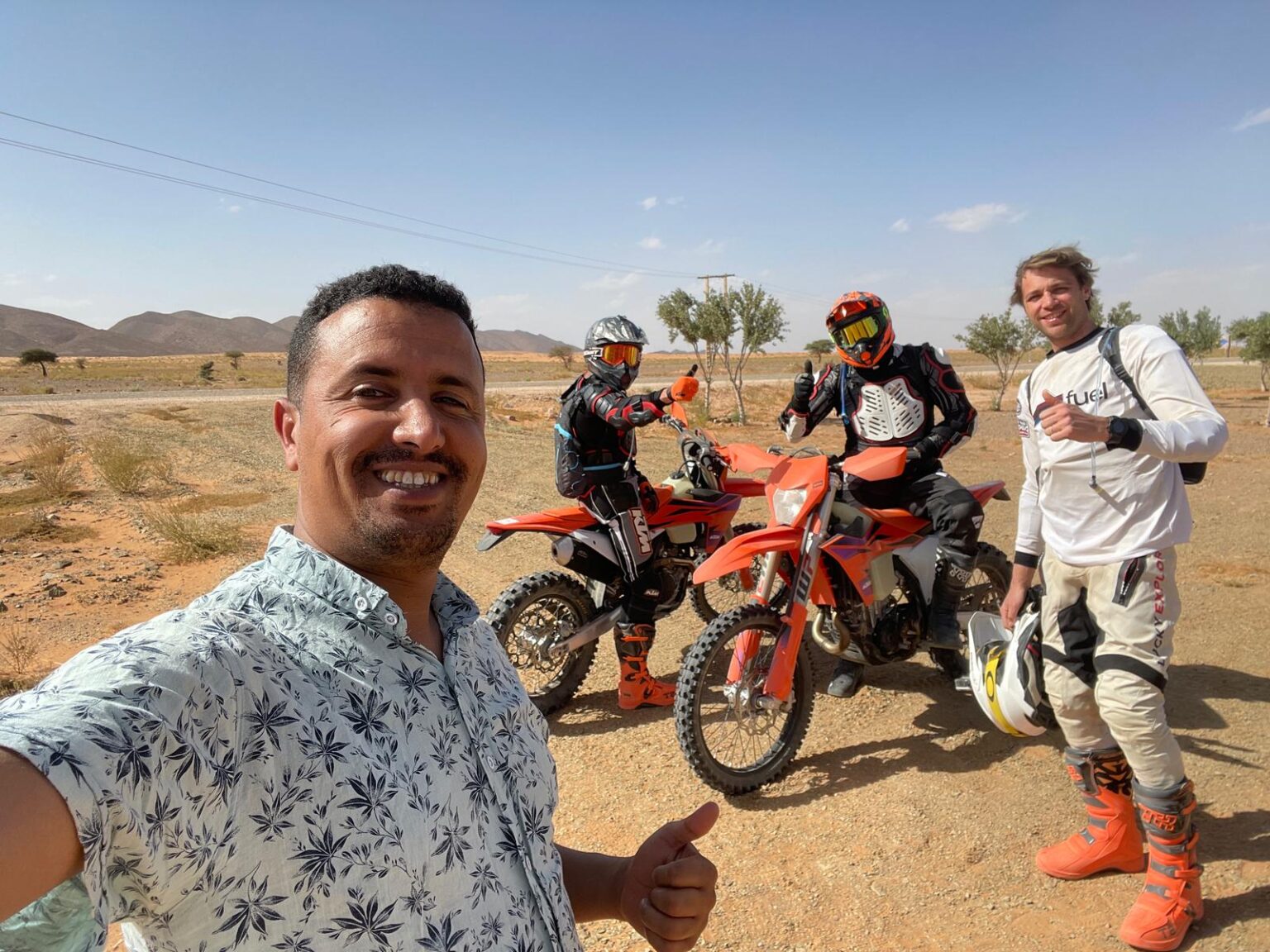
    • Nourddine — Founder & Travel Expert

    Keep Exploring Morocco

    Agadir

    7 Tours

    Casablanca

    24 Tours

    Fes

    7 Tours

    Marrakech

    51 Tours

    Rabat

    1 Tours

    Tangier

    9 Tours

    Good to Know Before You Travel

    Everything you need to plan your trip with confidence. If anything below isn’t clear, message Nourddine directly on WhatsApp, no call centre, no middleman, just straight answers from the person running your tour.

    The official currency is the Moroccan Dirham (MAD). Dirhams cannot be bought or sold outside Morocco, so exchange money on arrival at the airport, a bank, or an official bureau de change. ATMs are widely available in Marrakech, Fes, and Casablanca; in the desert and smaller villages they are scarce, so carry enough cash before heading out on tour. Nourddine can advise on how much cash to bring for meals and souvenirs not included in your package. [VERIFY: recommended cash amount per day]

    Morocco uses Type C and Type E plugs, running on 220V / 50Hz. Travelers from the USA, UK, Canada, Australia, New Zealand, and South Africa will need a plug adapter; US and Canadian travelers may also need a voltage converter for non dual-voltage devices. Power is generally reliable in cities and riads; in desert camps, electricity may be limited to solar charging points or generator hours. [VERIFY: charging availability in desert camps]

    These are general indications only, always confirm with your doctor or a travel health clinic before departure. Commonly discussed vaccines for travel to Morocco include Typhoid, Hepatitis A, Hepatitis B, Tuberculosis, and Rabies. Tap water is best avoided; stick to bottled or filtered water throughout the trip, including in the desert. Bring any personal medication in its original packaging, along with a basic first aid kit and sun protection, as Saharan sun and dust can be intense. [VERIFY: this content should be reviewed against current NHS/CDC guidance before publishing]

    Whether you need a visa depends on your nationality. As a general guide: US, UK, Australian, New Zealand, and most EU citizens typically do not require a visa for short tourist stays in Morocco. South African citizens and some other nationalities should check requirements with their local Moroccan embassy before booking flights. Visa rules can change, so always verify directly with the embassy for your nationality; Trek Morocco Desert cannot provide visa services. [VERIFY: current stay duration limits by nationality]

    Unlike marketplace platforms, you book directly with Nourddine, so there are no third party booking fees. A deposit secures your dates, with the balance due before departure. [VERIFY: deposit percentage and final balance deadline]. Accepted payment methods include [VERIFY: bank transfer / card / PayPal], and prices are confirmed in writing before you pay anything.

    Because every tour is arranged personally with Nourddine rather than through a call centre, cancellation terms are discussed and agreed directly with you at booking. [VERIFY: cancellation window and refund tiers]. If your plans change, message Nourddine as early as possible, flexibility is easier to arrange the more notice you give.

    Travel insurance is strongly recommended for all tours, covering medical emergencies, trip cancellation, and lost luggage. Trek Morocco Desert does not sell insurance directly; [VERIFY: whether to name a specific partner or recommend travelers arrange their own policy before departure]. Check that your policy covers activities included in your itinerary, such as camel trekking, sandboarding, or quad biking, if applicable. [VERIFY: activity-specific coverage note per tour]

    Some routes involve uneven desert terrain, long driving days, and accommodation without lift access, which may not suit every mobility level. Rather than promising a fit that may not exist, Nourddine prefers to discuss your specific needs directly before booking, so the itinerary can be honestly adapted or an alternative suggested. Contact Nourddine on WhatsApp to talk through accessibility requirements before you book. [VERIFY: which tours/vehicles can realistically accommodate reduced mobility]

    Layers matter more than any single item: days in the Sahara can be hot while nights turn cold, especially between November and February. Pack breathable clothing, a warm layer for desert evenings, comfortable walking shoes, a scarf or turban for sand and sun, sunglasses, sunscreen, and a reusable water bottle. A basic power bank is useful given limited charging in the desert. [VERIFY: seasonal packing note for summer vs winter departures]

    Spring (March to May) and autumn (September to November) offer the most comfortable temperatures for both the Atlas Mountains and the Sahara. Summer months bring intense desert heat, while winter nights in the desert can drop close to freezing, though days remain pleasant. Nourddine can help you choose dates and adjust the itinerary to the season. [VERIFY: month-by-month temperature guidance]

    Tipping is customary in Morocco for guides, drivers, and camel handlers; it is appreciated but never obligatory. [VERIFY: suggested tipping amounts per role]. Arabic and Amazigh (Berber) are the local languages, with French widely spoken and English increasingly common in tourism. Nourddine speaks [VERIFY: languages spoken] and is reachable throughout your trip via WhatsApp at +212 613 405 439.